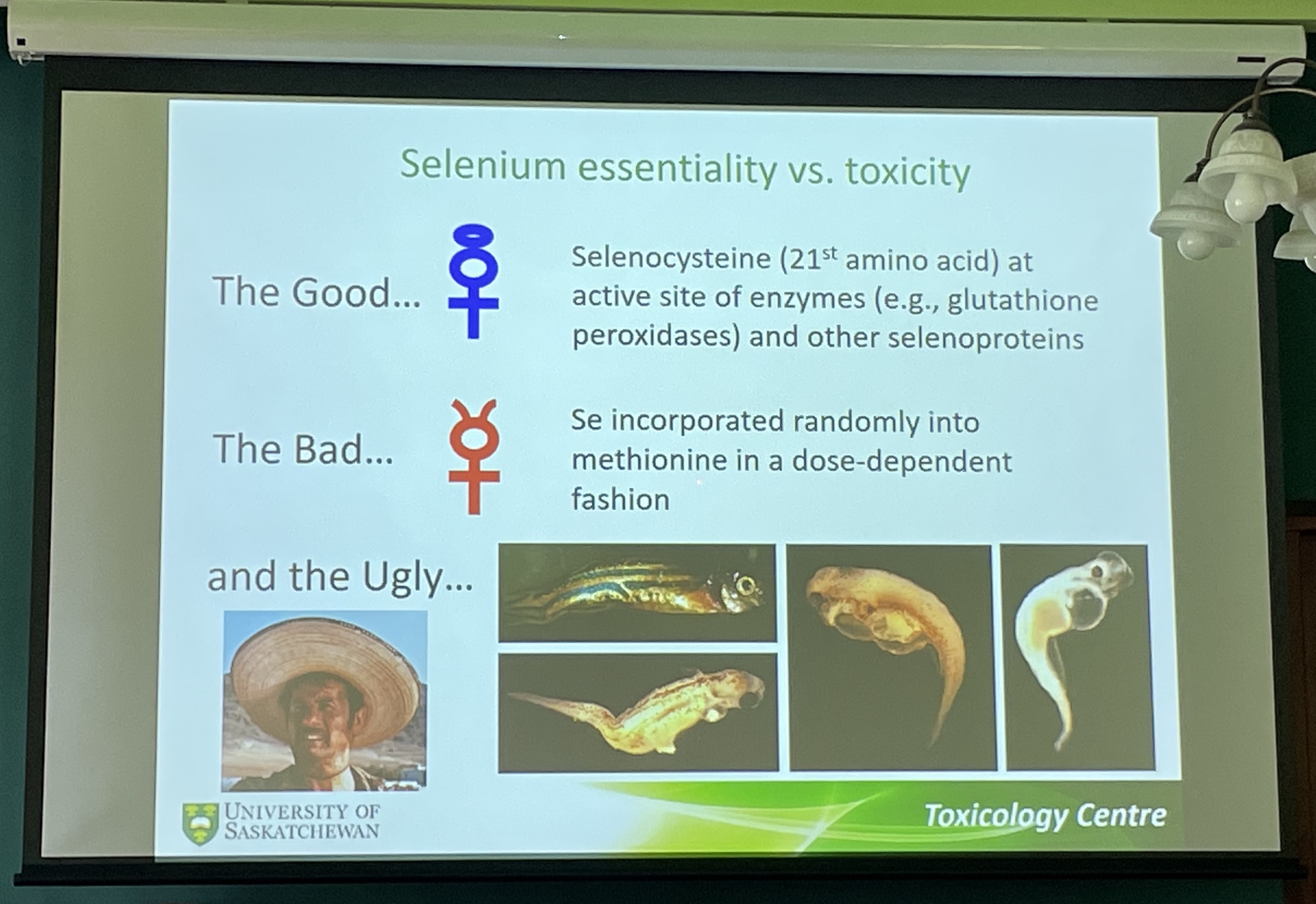
Our guest and collaborator, prof. David Janz (Department of Veterinary Biomedical Sciences and Toxicology Centre, University of Saskatchewan, Saskatoon, SK, Canada), presented on “Aquatic Ecotoxicology of Selenium: When a Good Nutrient Goes Bad” at our Institute on 12th of June this year. Professor Janz is an aquatic ecotoxicologist investigating mechanisms of developmental and reproductive toxicities in vertebrate animals exposed to priority aquatic pollutants. His research combines molecular, cellular, and physiological approaches in the laboratory with ecological approaches in the field. With his presentation, he took us on a tour of his field and laboratory research over the past 20 years that has focused on investigating mechanisms of aquatic Selenium toxicity in fishes spanning molecular/cellular through to organism/population levels of biological organization. Selenium (Se) is an essential trace element with important physiological roles in vertebrate animals that include antioxidant homeostasis. Paradoxically, Se can also be involved in producing oxidative stress at levels only slightly higher than those required for essentiality. Oviparous (yolk-bearing) vertebrates such as fishes are the most sensitive to supraphysiological Se exposures, which cause a characteristic suite of developmental and reproductive toxicities. A variety of human activities cause increased loading of Se into aquatic ecosystems, where it poses a high ecotoxicological hazard to aquatic species.
by Agnieszka Sergiel