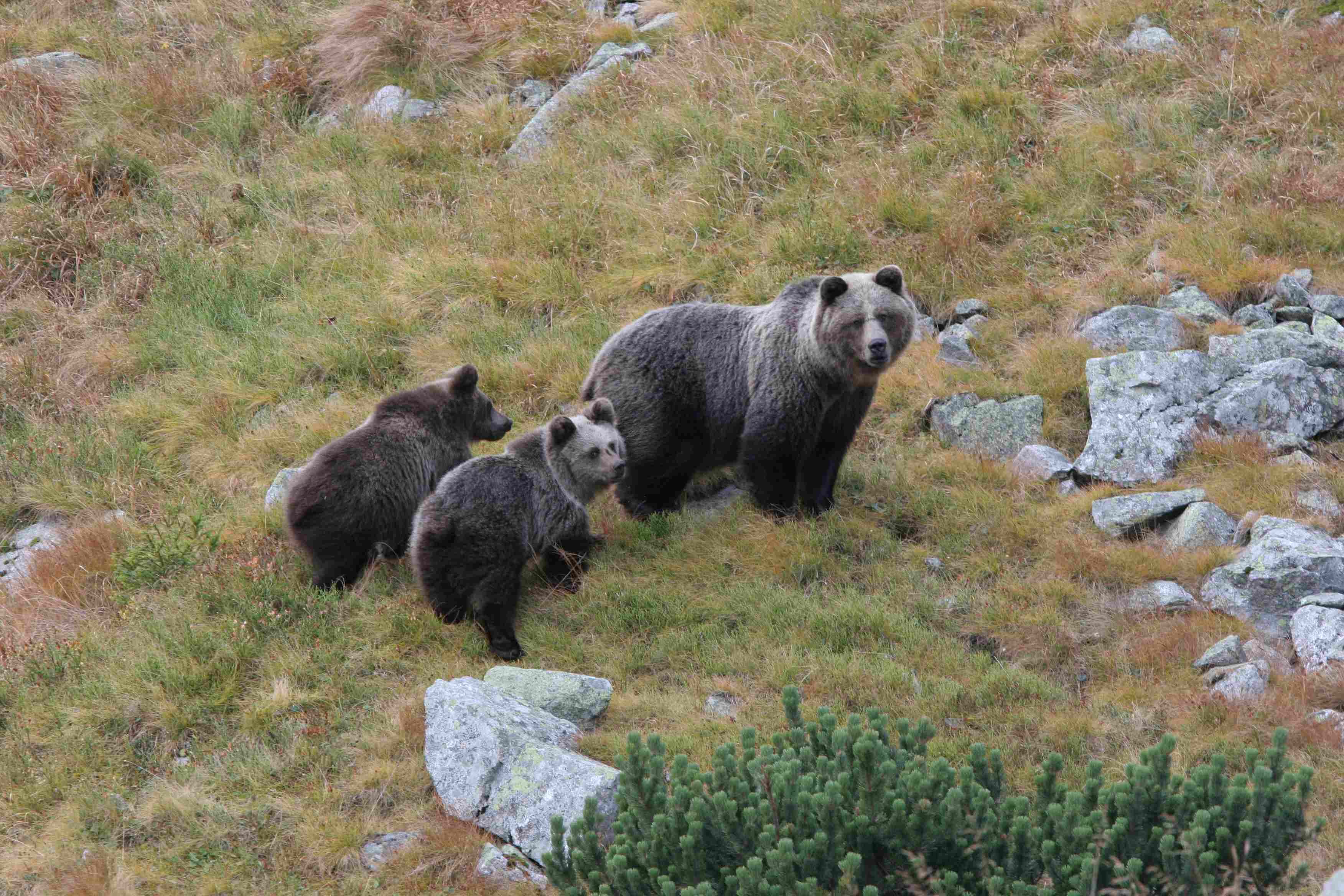
The sad news about the fatal bear attack yesterday (23.04.2026) reminds us how important is to know how to reduce the probability of encountering a bear and how to behave during a close encounter- especially with the May long weekend is approaching.
Bear attacks – especially fatal ones- are extremely rare. The last fatal bear attack in Poland occurred in 2014 in Olszanica and involved a severely wounded bear. Prior to that, the previous fatal incident dates back to 1927 in the Tatra region, when the bear population was very small (around 10 individuals).
Bear attacks are typically the result of a chain of unfortunate circumstances rather than a single cause. Attributing such incidents just to the number of bears is an oversimplification.
Bears will always avoid encountering people (unless they are habituated and/or food-conditioned). In an experimental study conducted in Scandinavia, researchers approached 52 GPS-collared bears nearly 300 times; in all cases the bears escaped, and in only 16% of the approaches the researchers could see or hear the animal.
In Poland, people walking off-trail, including antler collectors, appear to be among the groups most frequently involved in bear attacks. The main recommendations are: do not go off-trail, avoid going when it is dark or windy, and never let your dog run free. If you need to go off-trail, stay alert and make yourself detectable and visible. If you spot any sign of a bear, such as scats, a resting site or a freshly marked tree, or if you hear or see a bear, leave the area. You can find more detailed instructions in our website and in this article.