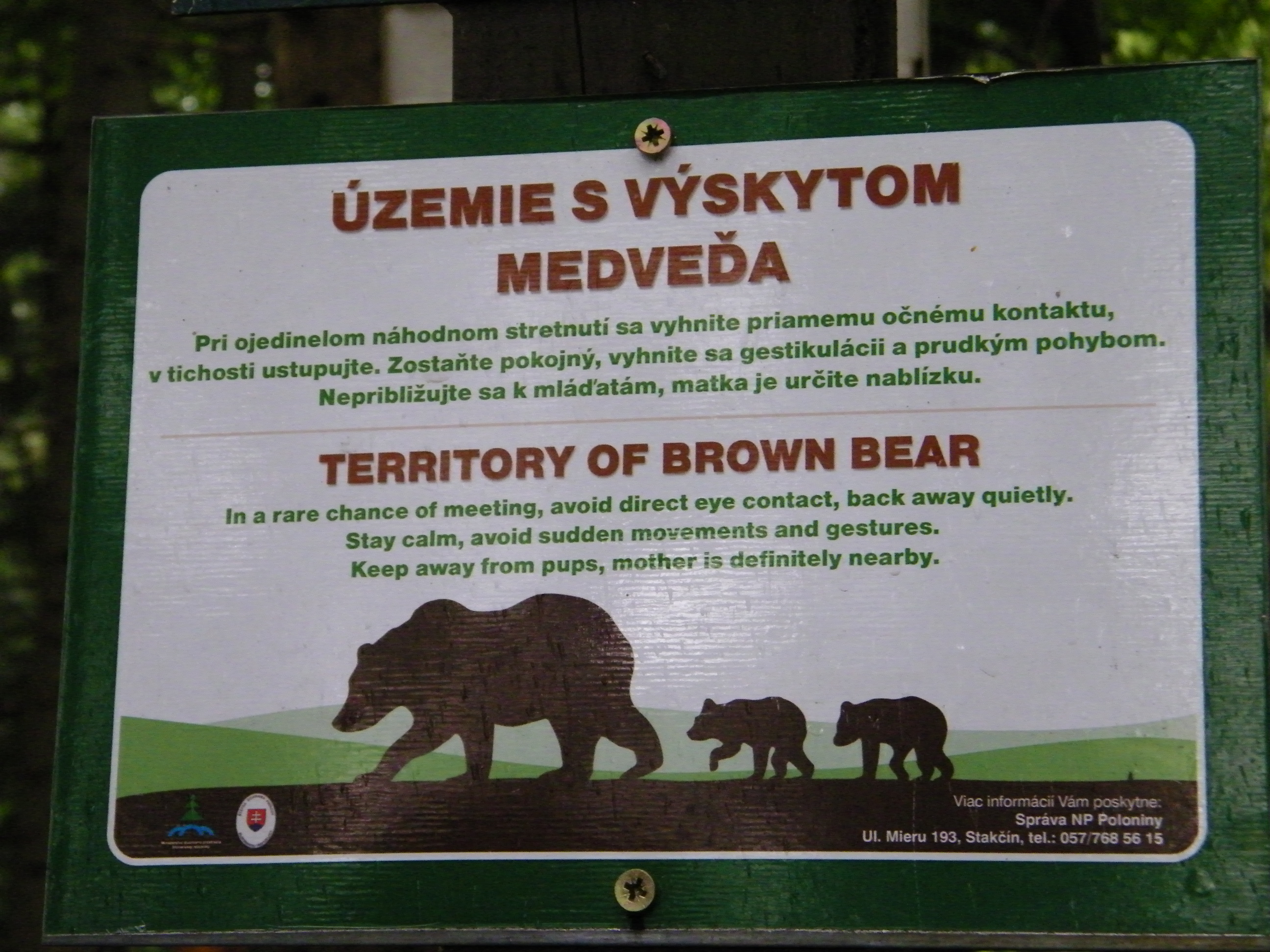
Since early spring of this year, reports about bears sighting in the outskirts of villages in the Polish Carpathians have been increasing. The Ministry of Climate and Environmental didn’t grant any of the five requests made by one of the village majors to eliminate the bear. Instead, the police have formed a bear-scaring unit to deter the animals away. The exact date of the last time a bear was legally killed in Poland is unknown to us, but it was probably several decades ago.
This is not the only case in which the recovery of large carnivore populations in Europe is leading to lethal measures being considered or even implemented in some regions and countries; see, for instance, the questionable decision of Sweden to kill an unprecedented number of wolves and lynx, more than twice as in previous years.
Attitudes and intentions to remove large carnivores also lead to illegal killings of highly valuable individuals, like the last wolf that has moved across half of Europe only to be killed by a poacher in Hungary. Unfortunately, legally or not, the latter is not new as it seems to be a relatively frequent end for dispersing individuals . These individuals are highly valuable for population connectivity. Some will propose that eliminating these individuals is necessary to build the trust and tolerance needed to conserve local populations of large carnivores. This, however, is not only very controversial but can also have undesired conservation outcomes, e.g., legal lethal control can increase poaching of large carnivores.
Lethal measures can be especially controversial as there is evidence showing that only a small portion of local populations engage in negative interactions with humans; see our latest publication exploring this issue with data on beehive damage caused by bears in the Polish Carpathians.
We argue that lethal control programs are often unjustified and inefficient and can hamper behavioural diversity in wild populations. Instead, we urge the implementation of evidence- and prevention-based conservation policies. A good approach to achieving this is presented in this recent paper, which proposes integrating bear ecology (their survival needs) with socio-economic factors (human actions and attitudes towards bears) to map the capacity for coexistence in the landscape. Identifying where to work on prevention and education in a proactive way can promote a more sustainable and less conflictive management than starting lethal control without thorough research, which can eventually open the Pandora’s Box of unintended consequences.
by Carlos Bautista