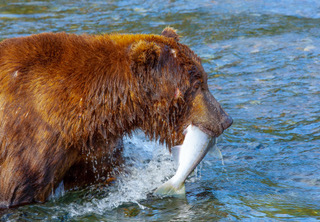
An international team of researchers led by researchers of the Institute of Nature Conservation -IOP PAN- analyzed extensive ecological and paleoecological data on seven bear species to understand how large omnivorous mammals respond to changing environmental conditions. The study revealed that bears can flexibly adjust their position in the food web, shifting the balance between plant- and animal-based foods depending on climate and resource availability. In harsh environments with short growing seasons, they adopt a more carnivorous diet, while in productive areas with long growing seasons, plant-based foods dominate. Isotope analyses of fossil bone samples indicate that similar shifts occurred after the last Ice Age, showing that trophic flexibility has deep evolutionary roots.
The study also highlights the value of natural history collections as a source of data on past ecosystems and suggests that large omnivorous megafauna can act as stabilizers of food webs in the face of global environmental changes. Shifts in their ecological role—referred to as “trophic rewiring”—may serve as an early warning of major ecosystem transformations. These findings provide new insights into the ecological roles of large carnivores and omnivores and help improve predictions of ecosystem responses to climate change.
You can read more here https://www.nature.com/articles/s41467-025-65959-7
Photo credit: Adam Wajrak